
Monument 10, Concrete Steel 2019 – Studio Payoka by William Leggett – A beautiful piece of art made from the harsh material of concrete. Concrete and natural stone surfaces can be processed manually or mechanically with the help of modern processing methods such as water jet cutting. It is now possible to produce a wide range of shapes from strong stone material. Perhaps once viewed as a commercial material for the foundation and structure of buildings, having this material made into a piece of art to be displayed is controversial to its past meaning. Yet the artist stays true to the material by making art which compliments the hard tense stoniness. William is an artist who uses steel and concrete to produce complex futuristic sculptures and has pioneered the use of Beton Brut (Raw concrete) from which the term Brutalism comes from. Brutalist architects valued the rawness of materials – promoting the “Truth to materials” Beton Brut is a style which leaves cast concrete unfinished, displaying it’s imperfections, lines and seems which are imprinted during the formwork (casting process).
The steel is not visible making the concrete material the star of the show within Leggett’s designs. The complex structure is heavy and strong, yet it starts life as a composite material with a paste like consistency which gradually hardens over time. The design is purely focused on the material, with no coating, paint or finishes, even the plinth this stands on is the same concrete material. This could be viewed as bland, however I feel there is something captivating and magical about the organic raw finish of a material with its natural imperfections for example – an air bubble or chip, a blemish, changes in colour, all these elements add to the depth and beauty of this artwork. The design compliments the material by adding further texture making William and craftsman of honour to his chosen material.


Metropol Parasol, Seville, Spain by Jurgen Mayer – One of the largest Timber constructions in the world. The Parasol is made from interlocking timber with a polyurethane coating which is held together with glue and steel connectors, all of which are on show. The materials used, which include a steel frame are clear to see, they are not faced with further materials to hide the connections between pieces of wood or where wood and steel come together. The finish is raw and simple yet the design and shape is complex and admirable. It is clear that this structure is made from interlocking pieces of wood, not something which is generally used in a building and the joins and workings of a structure are not so often exposed. I don’t believe that ‘Truth to Materials’ is Jurgen Mayers ethos in all projects but with the Metropol Parasol he lays his materials and components bare.


The Royal National Theatre, London, UK by Sir Denys Lasdun – One of London’s most divisive Brutalist buildings. Made of layered concrete, completed in 1976, the Royal National Theatre stands on the South Bank of the Thames. Internally and externally, the rough-cast concrete surface of the National Theatre shows the imprint of the sawn wooden planks used in the casting process, which were supposedly each only used twice, once on each side. Prince Charles famously described the structure as a nuclear power station, despite the vast criticism the Royal Theatre may be the most beloved Brutalist building in Britain due to its generous public space and the respect it offers to the surrounding city. Lasdun described architecture as ‘urban landscape’ and investigate ways of inserting modern buildings into the traditional city scape. I don’t necessarily believe Lasdun’s ethos was “truth to materials” for this particular project alone. I think his focus was on bringing people together in a public place to witness dramatic acts but perhaps his raw materials and brutalism which was used in his design was to take the focus away form the building itself, bringing the focus of the space about the people and the experience. Such philosophy is backed up by his vision of the public spaces of the design as a kind of fourth theatre where the members of public ‘acted’ their daily lives.
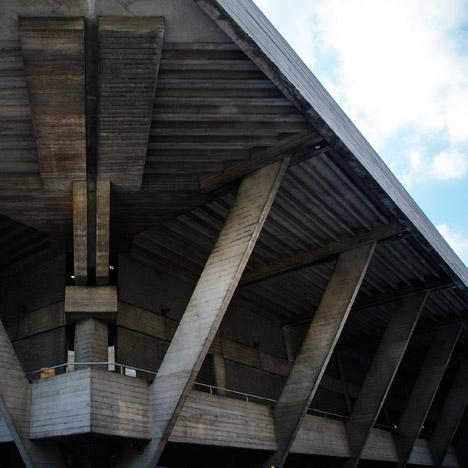
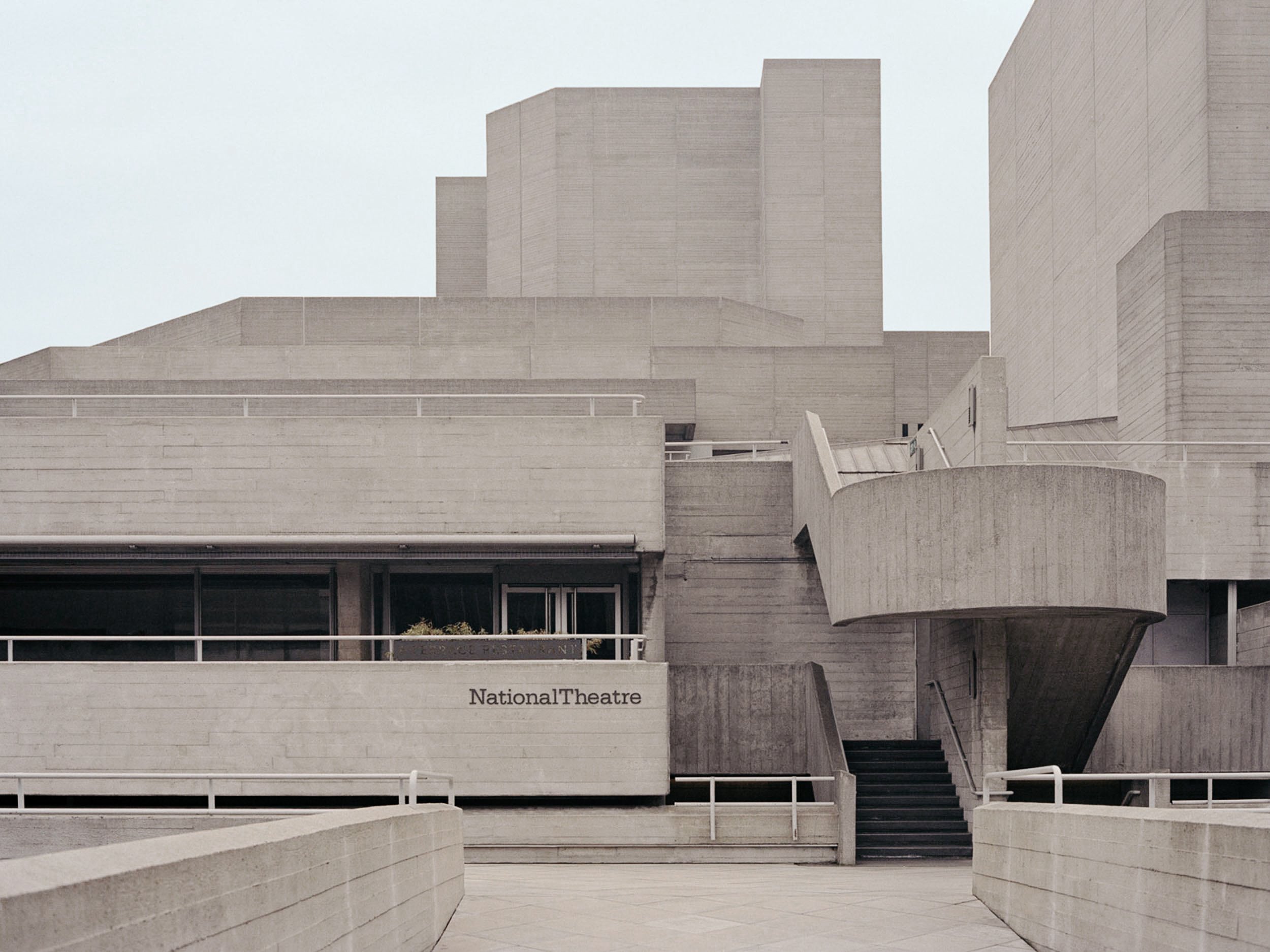
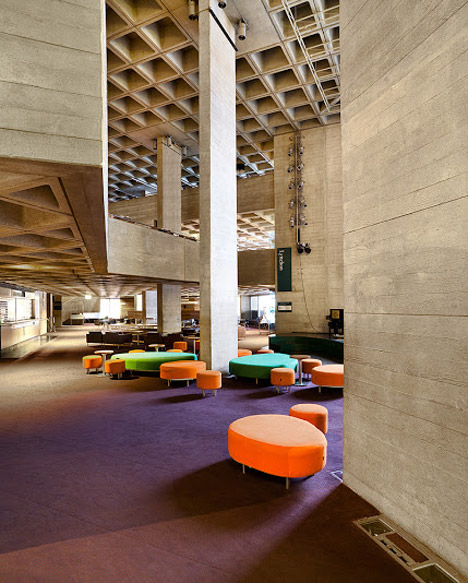
Even the board-form concrete extends to the interior of the theatres, where the textures are exaggerated to baffle sound. Development of the interior forms of the theatre spaces drove much of the design process for the building.
Lasdun was awarded the Royal Institute of British Architects Gold Medal in 1977, likely due in large part to the successful completion of the National Theatre.
Rory Menage, is best known for his figure based sculptural works made in a range of materials – limestone, iron, bronze, wood and alabaster. At the centre of Menage’s practice is an investigation into perceptions of the human figure and the place of object making within our digitally dominant time. Themes of scale, weight, and digital manipulation are crucial to his work, which he makes. While there is no direct mention of Menage’s ethos being centred around the ‘truth to materials’ theory, his artwork displays the beauty and natural elements of his chosen materials which are only possible in a non-digital world. The materials he uses are enhanced by his tools and designs, adding texture and layering, yet allowing the material to speak for itself. The polished bronze statue named Girl is one of my favourite pieces, I love they way this organically interacts with light and reflection and how the design highlights different surfaces yet this is made from one solid manipulated piece of alloy. He gives human form to these different materials perhaps guiding us to see them in a different light, allowing each material to speak its own language.


Barbra Hepworth was also British sculptor who ‘became leading practitioners of the avant-garde method of Direct Carving (working in the directly chosen material’ (Tate, 2019) and whose works were among the earliest abstract sculptures produced in England.

The patina of the bronze is art in itself, they are oxide layers that form when the reactive metals come into contact with anions (such as oxygen and chloride ions). To me this would appear to demonstrate ‘truth to materials’, allowing the metals to keep the art alive by forever changing oxidisation and giving the sculpture itself imperfections on shape and angles.

Hepworth worked on a variety of materials, sculpting, welding and moulding, creating sculptures which display the ethos of ‘truth to materials’.

You can see the materials used to create her sculptures. Mother and Child are made from alabaster, displaying the mineral markings with their own imperfections and organic textures and colours. The pieces appear to be separate however there are no fixing methods as they are carved from one piece of alabaster.
PART TWO REFERENCING:
https://www.archdaily.com/940077/possibilities-of-forms-for-molding-exposed-concrete (Accessed 14.02.2021)
http://www.archdaily.com/772979/ad-classics-royal-national-theatre-denys-lasdun?ad_medium=office_landing&ad_name=article (Accessed 15.02.2021)
https://www.tate.org.uk/art/artists/dame-barbara-hepworth-1274/who-is-barbara-hepworth (Accessed 14.02.2021)
Jmayerh.de. (2019). J. MAYER H. BUILDINGS METROPOL PARASOL. [online] At: http://www.jmayerh.de/19-0-Metropol-Parasol.html (Accessed on 14.02.2021)
Monument 10, William Legett (online) https://www.picuki.com/profile/studio_payoka (Accessed 14.02.2021)
National Theatre – Online – https://www.dezeen.com/2014/10/06/brutalist-buildings-national-theatre-london-denys-lasdun/ (Accessed 15.02.2021)
IMAGES
Barbara Hepworth – (Online) https://www.britannica.com/biography/Barbara-Hepworth (Accessed 16.02.2021)
Barbara Hepworth – (Online) https://www.tate.org.uk/art/artworks/hepworth-image-ii-t00958
Denys Lasdun – (Online) Evening Standard (Accessed 15.02.2021)
Metropol Parasol (Online) https://miesarch.com/work/2777 (Accessed 14.02.2021)
Monument 10, William Leggett – Studio Payoka @Instagram (Online) (Accessed 14.02.2021)
National Theatre – Photograph by James O. Davies. Image courtesy of English Heritage (Accessed 15.02.2021)
Rory Menag – (Online) https://www.aliceblackart.com/ap-rory-menage (Accessed 16.02.2021)
http://www.rorymenage.com/sculpture/ (Accessed 16.02.2021)
 Laura Woodgate